Author: dernyfleurima
Official Statement On CORONAVIRUS (COVID-19)
STATEMENT ON CORONAVIRUS 2019 (COVID-19)
March 22, 2020
From my home to yours:
As you all know, over the past month, our entire lives have been put on a halt as a result of COVID-19. This virus has spread globally at alarming rates. As of March 20th, 2020, there are 260,000+ cases worldwide and the virus has unfortunately taken the lives of over 11,000 people.
Right now, more than ever, it is important that we coincide with mandates placed by our federal government to practice social distancing, remain at home and wash our hands frequently throughout the day.
Please be sure to take the necessary precautions so that our medical professionals, who are still working on our behalf, can manage the current cases effectively.
Keep informed on what is happening through reputable sources such as: the World Health Organization (WHO.int / @who) and the Center for Disease Control (cdc.gov / @cdcgov).
Lastly, it is important for us to keep a sense of community. Check on your loved ones, friends and family and support one another. Have “Zoom” brunches and get-togethers and stay inside! We will get through this together.
My thoughts and prayers go out to the families that have been affected by this virus. Despite the uncertainty of the future, one thing remains constant: God is in control!
I pray that you all remain safe and I am confident that we will rise from this like a phoenix from the ashes. Be of good courage, this too shall pass.
Sincerely,
Derny Fleurima
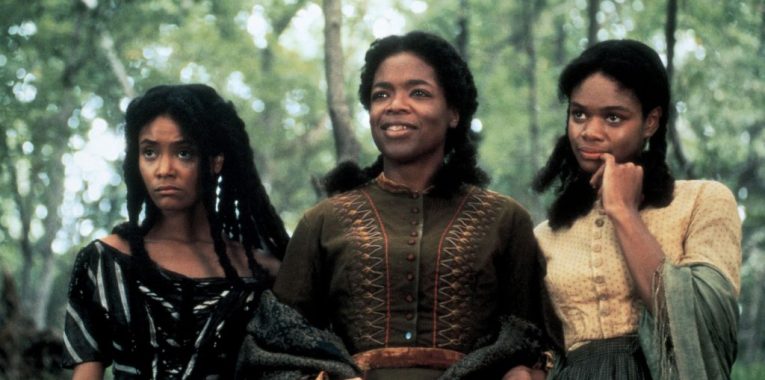
We Exist- How Toni Morrison’s “Beloved” gives us a better framework for understanding slavery
Beloved, written by the late Toni Morrison, tells the story of a fugitive slave named, Sethe. Sethe attempts to kill each of her children in order to prevent their enslavement. She successfully kills one, Beloved, who the novel is written after. Beloved’s ghost manifests as a fully-grown woman who haunts Sethe and her daughter in their home, 124.
I must admit, this novel was difficult to read. Not just because of Morrison’s colorful language, but because of the sheer heaviness of the text. Sethe kills her daughter. Her own flesh and blood. The graphicness of that is almost unbearable. Imagine, “what it took to drag the teeth of that saw under the little chin,” as Morrison writes.
In its intensity, Beloved provides two major takeaways. Firstly, Sethe’s action shows a resiliency that humanizes her. She is neither beast nor animal. She is a mother who has a “compulsion to nurture,” even when the situation does not appear conducive to do so. Secondly, slaves, though often dehumanized, were actual people. Complex beings with emotions, feelings and dreams. This is an important lens through which to understand slavery. Morrison does an excellent job of illustrating that slavery was not just a collective experience but was also an individual one that affected each affected each person differently.
Sethe is humanized by dispelling the paradigm that she exists in, the one that subjects her to the white man, the one that emboldens the idea that she owns nothing. There is an element of power that exists when a person takes it, though it is not granted to them. Sethe does just that. She owns nothing. She does not own her daughter. She does not own her life. She is, biologically, a human-being, but is reduced to a slave, therefore an animal of the wild, and animals do not choose. Yet, her power is evident when she takes a right that is not hers to begin with. In deciding to kill her daughter, she simultaneously exposes the fault of this hierarchy: She is a person. She has love, anger, sadness—actual emotions that exist. She forces her oppressors to recognize her and despite her gruesome action, in making this decision, she takes the power away from those who suppress her ability to choose.
Morrison also humanizes slaves in this text by demonstrating that they are individuals. They are unique people with their own idiosyncrasies. They should not just be thought of as a group of people subject to slavery, because each person’s experience is different. Thus, to truly understand Beloved and appreciate (yes, appreciate!) Sethe’s decision to kill her daughter, you have to step into the shoes of the characters.
Ladies, imagine this: You are forced to carry child. You carry this child for months. Your feet are swollen. You find difficulty getting out of bed or even putting on your shoes. You continue to work long hours for no pay, other than the prospect of breathing for another day because no day is guaranteed. For whatever reason, you may be slaughtered if you are deemed “unsuitable.” The father; no not father, but man who impregnated you, works long hours and cannot support you through this process. You are approaching your delivery date. The days feel longer; you feel heavier. You continue to work from sun up to sun down, caring for your mistress while neglecting your own health, let alone the health of your unborn child. You are without options.
Men, imagine this: You are beaten when you speak when you are not spoken to. You believe that you are giving your master suggestions, but he calls it “back-talk.” You have stripes on your back and bruises on your wrists. The rope burn on your neck has turned your black skin pink, then a violent red and now purple. You are not a man. You are likened unto cattle. You labor, you shit, you sleep, you arise and you labor once more. This perpetual cycle should leave you no opportunity to think of life beyond the plantation, but something burning within you causes you to sing songs that tell stories of a land away from there. You labor. You endeavor to live by the rules in anticipation of a life. You do not know what that looks like, but you can imagine that it means better days, for your mother and your pregnant lover. You toil the ground. You carry the burdens. You do not think there will be a life for you, but maybe there is one for them.
What readers should capture from Beloved is the complexity of those enslaved. After reading this text, one is able to look at slavery through a new lens. Through the eyes of an individual. Suddenly, it is easier to understand slavery, not as just an injustice that happened to a group of 600,000 people (in the United States), but happened to individuals. People with their own predilections and personalities. This happened to mothers, fathers, daughters and sons. To people who, just like us, had dreams and fears. To people who, just like us, had loved ones. This, I believe, is an excellent framework for understanding slavery, especially for anyone who minimizes the impact of it. Stop thinking about slavery as just a massive event that happened to thousands of people. Look at it as an injustice that could have happened to any person in your family, because this happened to people—individual people who actually exist.
For more content on great reads, business / finance, service and faith, connect with me on all social platforms @dernyfleurima.
Service Opportunity
Service Opportunities will be posted here! Coming Soon!

An excerpt from: The Beginner’s Guide for Choosing Stocks
The Beginner’s Guide for Choosing Stocks
So, you have decided that you want to invest in stocks. You have $1000+ that available to invest in the market. Where do you start? In this article, we will cover the attitude of the value investor, key metrics to pay attention to when analyzing stocks and some basic financial statement analysis.
The Value Investor
If you are new to the stock market and you don’t have a background in finance, you should aim to be a Value Investor. From its namesake, you can probably determine that as a Value Investor, you are searching for the best value out of the stocks that you purchase. As a Value Investor, you are not simply buying stocks for trends, rather, you are looking at companies with a magnifying glass to determine how valuable they are. Value investors want to purchase great stocks from great companies at prices cheaper than their intrinsic value (how much their stock should be worth according to the actual business, not necessarily the price that the stock is listed for on the market).
Value investors tend to have very good control over their emotions and they do not respond solely to the pricing of the market. This means, Value Investors are comfortable when their stocks are doing well and when they are losing money. Typically, Value Investors are looking to invest along a long term investment horizon. This means they are not looking to sell their stock within 6 months, these investors are playing the long game and are betting on the business’ future success. Thus, in order to make the best investment decisions, a Value Investor analyzes a company’s business model, management team and financials before making an investment. As an aspiring value investor, your evaluation of a company needs to be rigorous and thorough.
Lastly, Value Investors are safe investors. They do not put all their eggs into one basket. They spread their money across different industries, assets and companies to mitigate risk. This is known as diversification. We can think practically for why this makes sense: Let’s say you were investing in 2007-2008 and all your investments were in financial stocks. You would have lost a considerable amount of your invested capital in practically every stock you invested in because the entire financial industry was not doing well due to the financial crisis. Thus, the Value Investor will invest in different sectors, and companies in an attempt to create uncorrelated returns. Put simply, you want a portfolio in which Company A’s stock value could fall but that doesn’t necessarily mean Company B’s would fall as well. i.e.: uncorrelated.
Now that you know what a Value Investor is, we can talk about the process that a Value Investor may undergo before investing in a company. To make this more practical, we will use a public company that everyone knows, Nike, Inc.
The rest of this investment guide takes beginners through a company case study in which we analyze, Nike, Inc. We look at practical examples and actual data that will help the novice investor understand how to read financial charts, what financial ratios mean and how they are used and more! The rest of this investment guide is available for purchase of $20.00. Email me directly to request your copy : derny.fleurima@gmail.com
C L A R I T Y: “Even when the path is clouded, I do not fear”

As I write this, I am debating whether this is appropriate LinkedIn content. I have often been advised to refrain from speaking about controversial topics in the workplace, and by extension, LinkedIn. Thus, some may find it surprising that I am sharing my faith publicly. My rationale for sharing my faith is that I have found that many of my peers struggle with defining their next steps and lack clarity. On the contraire, through my relationship with Jesus Christ I have found that he gives grace to the soul and clarity to those who seek it. In the corporate realm, where it may be difficult to navigate the emotions, predilections and attitudes of others. It is important to remain grounded. Professionals should find something to keep them whole. For me, that is Jesus. I want to discuss a verse that has been on my mind for the past few weeks and share a personal anecdote with you. I do not write this in an attempt to incite conversion. I can only write how I feel and how this has affected me. I hope that you can find some value from it.
Over the past year, I have been thinking very deeply about the future. How will the world operate 10-50 years from now, and how can I leave a lasting impact on the world of tomorrow? As a scholar, humanitarian and businessman, these questions wake me up at night. I often find myself researching artificial intelligence, machine learning, neuroscience, bitcoin, digitization, food security, human trafficking—just to name a few. For me, this can be highly burdensome. I genuinely feel that I am on this earth to do something that impacts and benefits the lives of others. Yet, I am not sure exactly what that is. What I do know is that whatever impact I do have, it will be to raise the equity of people. This has led me to think a lot about legacy. What will my legacy be? How many people have I touched? How many people did I clothe, feed, educate and elevate this year? What would be said at my funeral? What would one say of Derny Fleurima?
In my bewilderment, I turned to the Bible and a verse stuck out to me: Proverbs 3:5-6. The verse reads:
“Trust in the Lord with all thine heart and lean not onto thine own understanding. In all thy ways, acknowledge him and he will direct thy paths.”
After reading that, I felt extremely convicted. I started to realize that everything that I was thinking about, while altruistic, was about Derny Fleurima. The emphasis was always on what Derny Fleurima could contribute to the world, what Derny Fleurima would be remembered for. I never included THE higher power in my plans. That is why I did not have clarity. I was struggling to understand my purpose and what I could contribute to the world, but what I failed to see was that everything could have been revealed to me, if I had consulted HIM first. At that moment, I began to truly trust in HIM with all my heart, and the question changed. Instead of “What will I do to leave an impact?” it became “What can I do that will let others see HIM through me?” I came to the realization that it is not and has never been about me. It is about HIM. That is the framework through which I have been approaching every major decision in my life. In all my ways, I acknowledge him and he has directed my path. Even when the path is clouded, I do not fear anything because I know he is guiding me along the way.
I do want to change the world. I do want to serve others and help people live better lives. I do want to leave a legacy and be remembered positively. Who doesn’t’? But, in all of that, in all that I do, in every success that I attain, in every decision I make, in every service that I do, I want people to see that it is not Derny Fleurima but Jesus Christ who is working through Derny Fleurima. Knowing that everything is not on my shoulders relieves my burdens, eliminates my fears, keeps me grounded and gives me clarity.
For more content on great reads, business / finance, service and faith, connect with me on all social platforms @dernyfleurima.

Reading Is A Must For The “Millennial Professional”
In the digital age where information is communicated through social media, it can be hard to find justification for reading a book cover to cover. There are summaries online, news articles that discuss topics and videos across the internet. Simply put, there are various options that we can use to get information other than the antiquated form, reading. As millennial professionals, we typically chose these options instead of reading books. We are “On-The-Go”, dynamic people who have busy schedules and cannot possibly find time to read a book cover to cover, right? Wrong. Here is why reading is an absolute necessity for the millennial professional:
1. Expand Your Knowledge of the Sector
You are probably the youngest person on your team or in your office with a number of people who are not only older than you but are also more experienced. You have to prove yourself as knowledgeable and trusted. Otherwise, you may be reduced to the “paper-pusher” who is computer savvy. Reading books about the past, present and future of your sector will help you to have educated conversations with the people you work with and will demonstrate that you are genuinely interested in the work that you do—So interested, in fact, that you do research on it on your own time and read about it.
Reading can also help you have insight on what you do at work and give you a “leg-up” on your peers when it comes to promotion opportunities and special projects. The knowledge that you ascertain will also help add new perspectives to tackling problems—and we all want to be the new analyst who solves problems not the one who causes them.
2. Building Relationships
As a new member of any organization, team or network, you should seek to build genuine relationships with the people you work with. One great way to do so is to take interest in the things that your colleagues are interested in and read about those topics. For example, if your superior says they love French history, it would behoove you to grab a book about it. Reading an article online is insufficient is because, you are not going to get much value from that. Reading a book however will be more informative and thorough. Due to the sheer breadth of information, you will definitely find a common theme that interests you about the topic. Now, you can talk to your supervisor intelligently about their interests and what YOU find intriguing about their interests. Dale Carnegie’s advice in “How To Win Friends And Influence People” is to “talk in terms of the other person’s interests.” Reading about your supervisor’s interests will demonstrate that you care about who they are and what they care about. As an added bonus, it will help you win their favor.
3. Better Vocabulary, Speech & Writing
You are 20-something. You should not communicate the way you did in college or even in high school. Speaking professionally and communicating effectively will help you differentiate yourself as a millennial professional. Our generation is accustomed to emojis, slang and 140 characters. There is nothing wrong with that but there is certainly a time and place for it. E-mails, presentations, client calls etc. are all opportunities for you to showcase your strong control of language and sophisticated vocabulary. The books that you read will expand your vocabulary and improve your writing skills as well.
Furthermore, regardless of what industry you are in, storytelling is important. If you are pitching a new client, explaining the purpose of an internal product or even on an interview, those who have the ability to tell a story and engage their audience typically fair better professionally than those who do not. That being said, who better to learn how to tell a story from than an actual author? Realistic fiction, fables and novels can all help improve this skill, and you may find yourself telling better stories, even amongst friends and family, after making reading a continuous habit.
4. A Great Stress Reliever
Lastly, beyond the practical uses for reading, the millennial professional will find that reading is an enjoyable way to relieve stress. If you have seen me on my morning commute, you know I am often grinning from chin to chin while scrolling through an e-book or physical book. For me, working in the financial services industry can definitely be stressful, but reading is a good way to unwind and switch gears before heading into the office. I have recently read “Becoming” by the Former First Lady of the United States, Mrs. Michelle Obama. Reading this text inspired and encouraged me but also made me chuckle. Feeling positive before starting the work day helps millennial professionals feel energized and focused to accomplish the tasks of the day.
There is unlimited UPSIDE to becoming smarter, building better relationships, enhancing your vocabulary and decreasing stress. You will become a better professional and a better person, too. It all starts with picking up a book. Find a book on a topic you are interested in, and, I promise you after a while, it will feel like the pages are turning themselves!
For more content on Great Reads, Finance/Business, Service and Faith, connect with me on all social platforms @dernyfleurima.
 Derny Fleurima